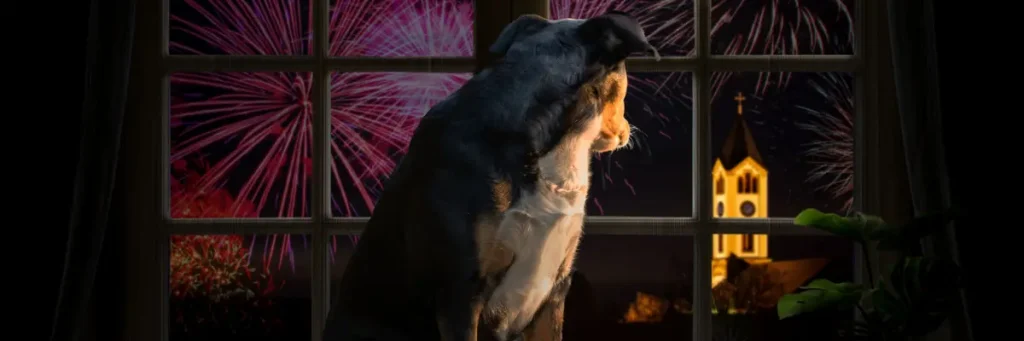
For many of us, fireworks are an enjoyable part of celebrations such as Bonfire Night, Diwali and New Year. Unfortunately, our pets don’t always feel the same way.
The sudden bangs, whistles and flashes can be genuinely frightening for dogs and cats – and what was once a single night of fireworks can now stretch across several weeks.
Firework anxiety is extremely common, ranging from mild restlessness to severe panic and attempts to escape. The good news is that there is plenty we can do to help, particularly when we start preparing early.
At Beehive Vets, we can advise on changes you can make at home, behavioural support with Candice and, for pets who really struggle, prescription medication. The aim is to make firework season as comfortable and stress-free as possible for both you and your pet.
Why Are Pets So Frightened of Fireworks?
Being frightened of fireworks isn’t your pet being silly or badly behaved. It’s a genuine fear response to something they don’t understand.
Dogs and cats have much more sensitive hearing than we do, so the explosions and whistles we consider loud can be particularly intense for them. Add sudden flashes of light, vibrations and the fact that neither the timing nor location of the next bang is predictable, and it’s easy to understand why some animals find fireworks terrifying.
Some pets are naturally more sensitive to noise than others, and genetics can play a role. Previous experiences matter too. A frightening experience can strengthen a pet’s response to fireworks, meaning the problem may become progressively worse each year if it isn’t addressed.
There is also a big difference between a pet who becomes mildly unsettled and one experiencing a genuine noise phobia. Both deserve support, but severely affected animals may need additional behavioural or medical help.
Signs Your Pet Is Stressed by Fireworks
Not every frightened pet responds in the same way. Dogs often display quite obvious signs of distress, whereas cats can be much more subtle.
Signs of Firework Anxiety in Dogs
Signs your dog is struggling can include:
- Trembling or shaking
- Excessive panting
- Pacing or being unable to settle
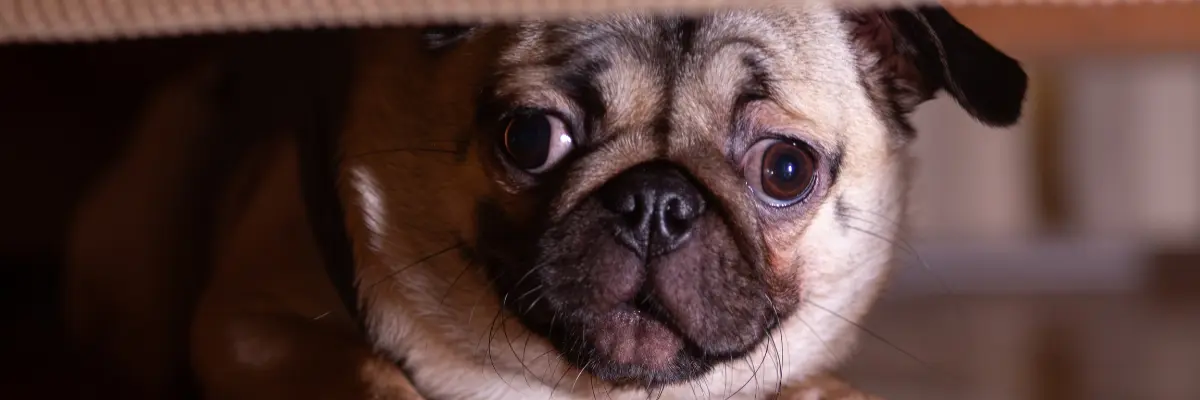
- Hiding
- Becoming unusually clingy
- Barking or whining
- Destructive behaviour
- Refusing food
- Toileting indoors despite being house trained
- Trying to escape
Attempts to escape are particularly important to take seriously. A panicking dog may try to get through doors, windows or fences that they would normally never attempt to cross, potentially causing serious injury or becoming lost.
Signs of Firework Anxiety in Cats
Cats often respond to fear by withdrawing rather than seeking reassurance, which can make their anxiety easier to miss.
Signs can include:
- Hiding for prolonged periods
- Refusing to come indoors – or refusing to go outside
- Changes in appetite
- Excessive grooming
- Unusual irritability or aggression
- Increased vocalisation
- Changes in toileting behaviour
Some cats may disappear into a wardrobe or under a bed and remain there until well after the fireworks have stopped. Although they may appear quieter than a distressed dog, they can still be experiencing considerable anxiety.
How to Prepare Before Firework Season Starts
Preparation is one of the most effective ways to help a pet with firework anxiety.
Ideally, don’t wait until fireworks are already going off outside. Starting several weeks – or even months – beforehand gives you many more options.
Talk to Your Vet Early
If your pet has struggled with fireworks previously, speak to us before firework season begins.
This is particularly important for animals with moderate or severe noise phobias. Prescription medication can be very helpful for some pets, but the best approach needs to be considered for the individual animal and arranged in advance.
Waiting until the afternoon of Bonfire Night significantly limits what we can do.
If you already know that October and November are difficult months for your pet, book an appointment early and we can make a plan together.
Book an appointment at Beehive Vets
Behavioural Support and Desensitisation
For some pets, a longer-term behavioural programme can reduce their response to fireworks.
Sound desensitisation involves playing recordings of fireworks at a volume low enough that your pet remains relaxed. The volume is then increased very gradually over a period of weeks or months, usually alongside positive experiences such as food, play or relaxation.
The key word is gradually. Playing loud firework recordings to a frightened dog in an attempt to make them “get used to it” can make the problem worse.
Desensitisation is therefore something to work on well before firework season rather than during it.
Candice offers behavioural support at Beehive Vets and can help owners develop an appropriate plan for pets struggling with noise phobias and other anxiety-related behaviours.
Find out more about pet behaviour services at Beehive Vets
Creating a Safe Space
Give your pet somewhere they can retreat to when they feel frightened.
For dogs, this might be a covered crate or a cosy area behind furniture with familiar bedding. For cats, a cardboard box, covered igloo bed or quiet room can work well.
Whenever possible, let your pet choose where they feel safest. If your cat always disappears under the bed when fireworks start, there is little benefit in trying to persuade them to use a new bed downstairs instead.
You can make the area more comfortable with familiar-smelling bedding or an unwashed item of your clothing.
Most importantly, introduce the safe space well before fireworks begin. It should already be somewhere your pet associates with relaxation and security rather than somewhere they are suddenly placed when they’re frightened.
Once fireworks start, always allow your pet free access to their chosen hiding place.
Microchipping and ID Tags
Unfortunately, frightened animals sometimes escape during fireworks.
Before firework season, check that your pet’s microchip is registered and that your contact details are up to date. Dogs should also have a secure, legible identification tag on their collar.
A microchip is only useful if the details registered against it allow someone to contact you.
If you’re unsure about your pet’s microchip, speak to the Beehive team. We can scan your pet to check their chip number and advise you on checking or updating the registered details.
What to Do on the Night
Even with good preparation, the evening itself matters. A few simple precautions can make your home feel much safer.
Keep Pets Indoors
Bring pets indoors before fireworks are likely to begin.
Walk dogs earlier in the day, ideally before it gets dark, and keep them on a lead if there’s any chance of unexpected fireworks.
Cats should ideally be brought inside before dusk. If you have a cat flap, consider locking it once your cat is safely indoors.
Check doors, windows and other potential escape routes carefully. A frightened animal may behave very differently from normal, so don’t assume that because your pet has never tried to escape before, they won’t do so when panicking.
Muffle the Sound
Closing windows, curtains and blinds can reduce both the noise and flashes from fireworks.
Background noise can also help. Leaving the television or radio on provides a more constant sound environment and makes individual bangs less noticeable. Classical music and pet-calming playlists work well for some animals.
If possible, stay at home with a pet you know is frightened of fireworks. Your familiar presence can be reassuring even if they choose not to interact with you.
How to Behave Around an Anxious Pet
Owners are sometimes told that comforting a frightened pet will “reward” their fear.
We now understand that fear isn’t a behaviour an animal simply chooses in order to gain attention. If your dog seeks reassurance from you, it’s absolutely fine to provide it.
Equally, don’t force interaction. If your dog wants to hide under the table or your cat disappears under the bed, let them stay there.
Try to behave calmly and normally yourself. Your pet will often take cues from the people around them.
Never punish stress-related behaviour. Toileting indoors, barking, scratching or destructive behaviour during fireworks may be frustrating, but punishment will only add another source of anxiety to an already frightened animal.
Calming Products Worth Trying
There are several non-prescription products that can be useful, particularly for pets with mild to moderate firework anxiety.
Adaptil for dogs and Feliway for cats use synthetic versions of naturally occurring pheromones and are available as diffusers and sprays. They tend to work best when introduced before firework season rather than plugged in after the first bang.
Calming supplements may also help some animals, although products vary considerably so ask us if you’re unsure which are worth trying.
Some dogs respond well to pressure garments or anxiety wraps such as ThunderShirts. These provide gentle, constant pressure around the body and can have a calming effect in some individuals.
These approaches can be valuable, but they’re unlikely to be enough on their own for a severely phobic animal. If your pet is panicking, trying to escape or remaining distressed for prolonged periods, please speak to us about additional options.
Prescription Options for Severely Anxious Pets
For pets with significant firework phobia, prescription medication can make an enormous difference.
The medications available to us have improved significantly over the years. Modern treatment isn’t simply about heavily sedating an animal so that they can’t react to the fireworks. In fact, making a frightened animal physically sleepy without adequately addressing the fear itself isn’t what we’re trying to achieve.
Different medications work in different ways. Some are designed to reduce acute anxiety and the fear response around the time of the event. Other approaches may form part of a longer-term behavioural plan, particularly where anxiety is severe or extends beyond fireworks.
An important consideration is preventing repeated episodes of extreme fear from strengthening the problem. Every year in which a pet experiences severe, uncontrolled panic can potentially make their response harder to manage in future.
The right medication depends on the individual pet, their health, the severity of their anxiety and any other medicines they’re taking.
This is why it’s important to talk to us before firework season rather than waiting until Bonfire Night itself. We can assess your pet and discuss whether medication, behavioural support or a combination of approaches would be most appropriate.
If you’re a member of our Healthy Hive Club, don’t forget you receive a discount on consultations – worth bearing in mind if you’d like to discuss a firework anxiety plan for your pet.
Firework Safety in the Garden
The morning after fireworks, have a quick check around your garden before letting pets outside.
Spent fireworks and other debris can land surprisingly far from where they were launched and may be harmful if chewed or swallowed.
Never leave pets unsupervised around bonfires, fire pits or other open flames.
Glow sticks are another potential problem around Bonfire Night. The liquid inside has an extremely unpleasant taste and can cause significant drooling and distress if a pet, particularly a cat, bites into one. Keep them well out of reach.
During periods when fireworks are frequent, try to keep outdoor cats indoors from dusk whenever possible.
Frequently Asked Questions
Can I give my dog human medication to calm them down?
No. Don’t give your dog or cat human medication unless a vet has specifically instructed you to do so. Some human medicines can be dangerous or even toxic to pets, while others may interact with existing medication or medical conditions.
If your pet needs medication for firework anxiety, speak to us so we can recommend something safe and appropriate.
My cat hides during fireworks – should I try to bring them out?
Usually, no. Hiding is a natural coping mechanism for cats. If your cat has found a secure hiding place, allow them to stay there. Make sure they have access to food, water and a litter tray, but don’t repeatedly pull them out or force them to interact.
They’ll usually emerge when they feel safe.
Will my pet’s firework anxiety get better on its own?
Unfortunately, not necessarily. Noise sensitivity can become progressively worse, particularly when a pet experiences repeated episodes of intense fear. Addressing the problem early gives us a much better opportunity to prevent it becoming more severe.
My dog has never been bothered by fireworks before but seems anxious this year – why?
Noise sensitivity can develop at any age. A particularly frightening experience may trigger it, while pain, illness, changes in hearing and age-related cognitive changes can also alter how a dog responds to noise.
If an older dog suddenly develops a new fear of fireworks or other sounds, it’s worth mentioning this to your vet so we can consider whether there might be an underlying medical reason.
Is it too late to do anything if firework season has already started?
No. Some longer-term approaches such as desensitisation need to be started well in advance, but there are still plenty of things we can do to make your pet more comfortable now.
Creating a safe space, managing the home environment, using appropriate calming products and where necessary discussing prescription medication can all help. We can also make a longer-term plan so you’re better prepared next year.
At what age can pets start desensitisation training?
Positive exposure to different sights and sounds can begin during the important socialisation period when puppies and kittens are young.
For older animals, structured desensitisation can still be extremely useful. The important thing is that exposure remains below the level at which the animal becomes frightened. If your pet already has a significant noise phobia, we’d recommend getting behavioural advice before starting.
Worried About Your Pet This Firework Season?
Watching a pet panic during fireworks can be incredibly upsetting. If every Bonfire Night involves hours of shaking, panting, hiding or attempts to escape, you don’t simply have to hope that this year will be better.
There are lots of ways we can help.
For some pets, changes to their environment and a little preparation may be all that’s needed. Others benefit from a structured behavioural programme, while pets with severe noise phobias may be much more comfortable with appropriate prescription medication.
Our team at Beehive Vets can help you work out what’s right for your pet. Candice can also provide dedicated behavioural support for animals struggling with noise phobias and anxiety – you can find out more about her services here: Pet Behaviour Services
Most importantly, don’t leave it until the fireworks start. The earlier we can make a plan, the more options we have.
Call: 0113 824 2700
Email: hello@beehivevets.co.uk
Pop in: 103 Commercial Street, Rothwell, Leeds, LS26 0QD
Book an appointment online today.
We’re an independent practice in Rothwell and we’re always happy to support local media with honest, practical pet health advice. If you’re working on a story and need a vet’s perspective, drop us a line at hello@beehivevets.co.uk