When we think about heart disease in pets, most of us picture an older, frail dog struggling to get up the stairs. But the reality is often far more subtle than that. Dogs and cats are masters at hiding illness, and heart disease in particular can develop quietly in the background for months, sometimes years, before an owner notices anything is wrong.
At Beehive Vets Rothwell, we see this pattern often. A pet comes in for something unrelated, a vaccination, a dental check, a routine visit, and during the examination we pick up a murmur or an irregular heartbeat that the owner had no idea was there. It’s not because owners aren’t paying attention, it’s because the early signs of heart disease genuinely are easy to miss.
This guide walks through what those early signs actually look like, why they’re so easy to overlook, and what to do if something doesn’t feel quite right with your pet.
How Common is Heart Disease in Dogs and Cats?
Heart disease is one of the more frequently diagnosed conditions in older pets, though it can affect animals of any age depending on the underlying cause. In dogs, conditions like mitral valve disease and dilated cardiomyopathy are among the most common culprits. In cats, hypertrophic cardiomyopathy is overwhelmingly the most common form of heart disease, and it’s notoriously difficult to spot until the advanced stages.
The tricky part is that pets compensate. Their bodies adjust to reduced heart function gradually, which means symptoms often don’t appear until the condition has already advanced. By the time an owner notices something is wrong, the heart has usually been working harder than it should for some time.
This is exactly why routine check-ups matter so much, even when your pet seems perfectly fine on the surface.
Why Heart Disease Symptoms Are So Easy to Miss
Pets don’t tell us when they’re struggling. A dog who’s slowing down on walks might just seem like they’re getting older. A cat who’s sleeping more might just seem, well, like a cat. Owners naturally put these changes down to age or a quiet day, rather than something more serious going on underneath.
“I’d say that most heart disease is picked up by a vet on routine clinical examination rather than through symptoms that their owner has noticed. There are exceptions of course, especially in cats who can present in the advanced stages of heart disease having been completely normal the previous day, or dogs that faint during exercise, but these are less common examples. Mostly we pick up heart murmurs or irregular rhythms when listening with a stethoscope”
Luke Green, Veterinary Surgeon & Co-owner, Beehive Vets
Add to that the fact that cats in particular are exceptionally good at masking illness, a survival instinct left over from their wild ancestors, and it becomes clear why heart disease so often goes undetected until a vet picks it up during an unrelated visit.
This is one of the main reasons we always carry out a full clinical examination, including listening to the heart, even when a pet has come in for something completely different.
The Early Warning Signs to Watch For
A Persistent Cough
A cough that doesn’t seem to go away, particularly one that’s worse at night or after exercise, can be one of the earliest indicators of heart disease in dogs. This is often associated with a chronic condition such as bronchitis or softening of the airways with age, but enlargement of the heart will usually make the cough worse over time. It’s often mistaken for a simple throat irritation or kennel cough, especially if it’s intermittent. Cough is usually only associated with heart disease in dogs, much less so in cats.
Reduced Exercise Tolerance
If your dog used to bound up the stairs or chase the ball without a second thought, and now seems to tire more quickly or wants to stop halfway through a walk, it’s worth paying attention. This kind of change can be gradual, which makes it easy to write off as simply “getting older” rather than recognising it as a potential symptom.
Breathlessness or Rapid Breathing
Laboured breathing, even at rest, is something we always take seriously. This includes breathing that seems faster than normal when your pet is simply relaxing on the sofa, not just during exercise. In cats, this can be particularly subtle and is sometimes the only sign owners notice before a more serious episode occurs.
Fainting or Collapsing Episodes
Brief collapses, sometimes referred to as syncope, can occur when the heart temporarily fails to pump enough blood to the brain. These episodes might last just a few seconds and resolve on their own, which can make them easy to dismiss as a one-off. They should never be ignored.
Lethargy and General Tiredness
A pet who seems less interested in play, slower to greet you, or who’s simply sleeping more than usual could be showing one of the more general, harder-to-pinpoint signs of heart disease. On its own, this symptom is easy to attribute to countless other causes, which is exactly why it often gets missed.
Changes in Appetite or Weight Loss
As heart disease progresses, some pets lose interest in food or begin to lose weight, sometimes despite eating normally. This can be linked to the extra energy the body uses trying to compensate for reduced heart function.
A Swollen Abdomen
In more advanced cases, fluid can build up in the abdomen, leading to visible swelling or a pot-bellied appearance. This is usually a sign that the condition has progressed further and needs prompt veterinary attention.
These signs are only usually present in the advanced stages of heart disease. Earlier on in the course symptoms are often not present.
Why Cats Are Particularly Difficult to Read
Cats deserve a special mention here. Feline heart disease, particularly hypertrophic cardiomyopathy, can exist for a long time with no outward symptoms at all. Many cats appear completely healthy right up until a sudden, serious event occurs, such as acute breathing difficulty or even a clot affecting the back legs.
This is why we always recommend regular health checks for cats, even ones who seem perfectly well. A murmur or arrhythmia picked up during a routine appointment can be the only clue that something needs further investigation, long before any visible symptoms appear. Many cats with heart disease show no signs on clinical examination at all either, and we know that HCM is a very common condition in older cats. There is no agreement between cardiologists on how to best screen cats for heart disease but blood tests and a heart scan are the best tools available to us for at-risk animals; those with symptoms or older individuals due to undergo a general anaesthetic or treatment that could destabilise occult heart disease.
What Happens If We Suspect Heart Disease
If our team notices a murmur, an irregular rhythm, or any of the warning signs above, during an examination, the next step is usually further investigation to understand exactly what’s going on.
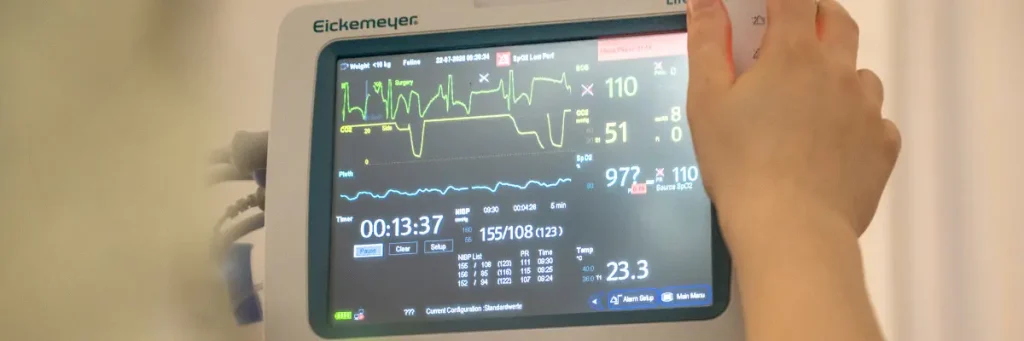
At Beehive Vets, our cardiology service is led by Luke, who completed a two-year training programme in small animal cardiology and now holds a post graduate certificate in small animal cardiology studies (PgC Cardio). We use a combination of diagnostic tools depending on what’s needed, including echocardiography (ultrasound) to assess the structure and function of the heart, digital chest x-rays to look at the outline of the heart and the structure of the lungs, ECG to check the heart’s electrical activity, and Holter monitoring for longer term monitoring or heart rate and rhythm.
Because we have this equipment in-house, most assessments can be carried out without the stress of referral elsewhere, which makes the whole process easier for both you and your pet.
What Treatment Looks Like
A diagnosis of heart disease doesn’t necessarily mean a poor outlook. Many pets go on to live comfortable, happy lives with the right management. Treatment sometimes involves medication to support heart function and manage symptoms, alongside regular monitoring to track how things are progressing over time. Part of the benefit of the testing is it shows us which animals will benefit from medication to prevent serious complications like blood clots, or to delay disease progression leading to longer, healthier lives.
For more complex cases, we work alongside specialist cardiologists to make sure your pet has access to the highest level of care, while keeping as much of their treatment as possible close to home.
When You Should Book a Check-Up
If you’ve noticed any of the signs mentioned above, even if they seem minor or inconsistent, it’s worth booking an appointment. Early detection genuinely does make a difference to long-term outcomes, and a simple clinical examination is often all it takes to flag a potential issue.
It’s also worth remembering that regular health checks, even when your pet seems completely well, are one of the best tools we have for catching heart disease early.
Concerned About Your Pet’s Heart Health?
If your dog or cat has been coughing, slowing down on walks, breathing differently, or just hasn’t had a health check in a while, our team in Rothwell is here to help. Early assessment can make all the difference.
Call: 0113 824 2700
Email: hello@beehivevets.co.uk
Pop in at: 103 Commercial Street, Rothwell, Leeds, LS26 0QD
Find out more about our cardiology services or book an appointment online today.
We’re an independent practice in Rothwell and we’re always happy to support local media with honest, practical pet health advice. If you’re working on a story and need a vet’s perspective, drop us a line at hello@beehivevets.co.uk