Dental disease is one of the most common health problems we see in dogs and cats, and one of the most often overlooked. Most dogs and cats show signs of it by the age of three, yet many owners don’t know there’s a problem until it’s quite advanced.
The difficulty is that pets are brilliant at hiding dental pain. A dog can carry on eating enthusiastically with painful teeth, and a cat may show almost no outward signs at all.
At Beehive Vets in Rothwell, we think good dental care is an essential part of keeping pets healthy and comfortable throughout their lives. Here’s what every owner should know about dental disease, how to spot it and what we can do to help.
What Is Dental Disease in Pets?
Dental disease usually starts with plaque, a sticky film of bacteria that’s constantly forming on the teeth. If it isn’t removed, it hardens into tartar (also called calculus), which gives more plaque a rough surface to cling to, especially around the gumline.
As the bacteria build up, the gums become inflamed. This is called gingivitis. At this early stage it can usually be reversed with dental treatment and good home care.
Left untreated, it can progress to periodontal disease, which damages the tissues that support the teeth. That can mean:
- Receding gums and exposed tooth roots
- Loss of the bone around the teeth
- Painful infection
- Loose teeth and tooth loss
- Occasionally, abscesses or fractures of the weakened jaw
Once the bone and supporting tissues are badly damaged, cleaning the teeth can’t undo it. That’s why catching dental disease early matters so much.
Why Dental Disease Is So Easy to Miss
Many people assume a pet with a sore mouth will stop eating. Unfortunately, they usually don’t. Eating is a survival instinct, so most animals adapt to the discomfort rather than refusing food. Cats are especially good at hiding pain, and even cats with severe disease may carry on eating, grooming and behaving normally.
Other reasons it often goes unnoticed:
- Most owners don’t regularly look inside their pet’s mouth
- Bad breath is often dismissed as normal ‘doggy breath’
- It develops gradually, so day-to-day changes are hard to see
- Changes in behaviour get put down to old age
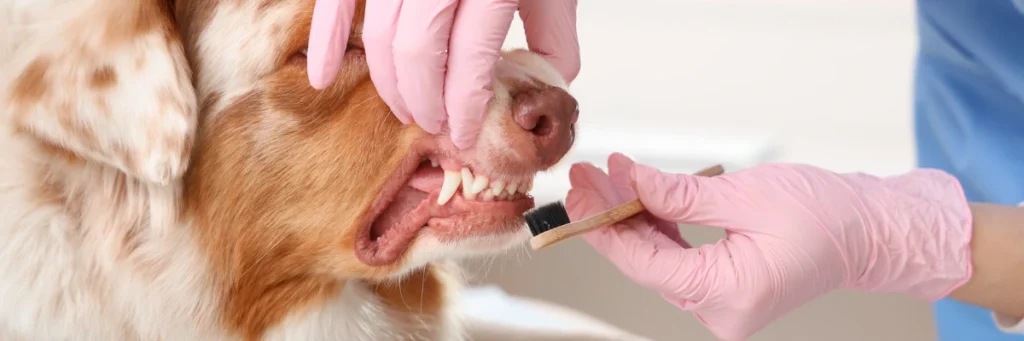
In fact, many dental problems are first found at a routine check-up, not because an owner noticed something wrong. That’s why we look at your pet’s mouth during health checks and vaccination appointments.
Signs of Dental Disease in Dogs
Some dogs show very few signs. Look out for:
- Bad breath: one of the most common early warning signs
- Yellow or brown deposits on the teeth: usually tartar
- Red, swollen or bleeding gums: often gingivitis or more advanced gum disease
- Dropping food or chewing on one side
- Pawing at the mouth
- Reluctance to chew toys or treats they used to enjoy
- Changes in behaviour: becoming quieter, irritable or not wanting their face touched
- Excessive drooling, especially with a nasty smell
- Loose or missing teeth: usually a sign of more advanced disease
A dog doesn’t need to show all of these, or any of them, to have significant dental disease.
Signs of Dental Disease in Cats
Cats are even harder to read. Possible signs include:
- Persistent bad breath
- Eating more slowly, dropping food or leaving meals unfinished
- A new preference for wet food
- Drooling, sometimes with blood in the saliva
- Pawing at the mouth or face
- Grooming less, or an unkempt coat
- Weight loss
- Becoming withdrawn or changing in temperament
Tooth Resorption in Cats
Tooth resorption is surprisingly common in cats, especially as they get older. The tooth’s own hard tissue is gradually broken down by cells in the body, affecting the crown, the root or both. The lesions can be extremely painful once the sensitive inside of the tooth is exposed.
Sometimes you can see a small red or pink spot near the gumline, but many lesions are hidden under the gum and only show up on dental x-rays. Affected cats may show very little outward discomfort.
Why Dental Disease Matters Beyond the Mouth
Dental disease isn’t just a cosmetic problem. It’s a source of ongoing inflammation, infection and pain.
Research has linked gum disease with problems affecting other organs, including the heart and kidneys. A direct cause and effect hasn’t been proven for many of these conditions in pets, but keeping the mouth healthy is a sensible part of keeping the whole animal healthy.
The most immediate effect, though, is on quality of life. Chronic mouth pain can affect appetite, sleep, grooming, playfulness and how sociable your pet is. Owners often tell us their pet seems happier, more playful or more affectionate after dental treatment. Sometimes it’s only once painful teeth have been treated that we realise how much discomfort an animal had been living with.
What Happens at a Dental Check-Up at Beehive Vets?
We check your pet’s mouth as part of their routine examination. While they’re awake, your vet will look for:
- Plaque and tartar
- Red, swollen or receding gums
- Broken, damaged or loose teeth
- Signs of infection
- Lumps or abnormalities in the mouth
- Visible signs of tooth resorption in cats
But there’s an important limit to checking an awake pet: much of the tooth is hidden under the gum. A tooth that looks healthy can have disease in its root or the bone around it, and a tooth covered in tartar may not need removing at all.
To assess dental disease properly, we often need to examine the teeth under general anaesthetic, probe around the gumline and take dental x-rays.
What Does a Dental Procedure Involve?
We know the thought of your pet having a dental under general anaesthetic can be worrying. Here’s what happens, step by step.
1. Pre-anaesthetic check. We’ll assess your pet before the procedure and, depending on their age and health, may recommend blood tests. We tailor the anaesthetic to your pet.
2. General anaesthetic. A thorough dental needs one. It lets us examine every tooth, clean under the gumline, take x-rays and carry out treatment without distress or pain, and it protects your pet’s airway from water and debris. So-called ‘anaesthetic-free dental cleaning’ can’t properly assess or treat disease under the gums, so it isn’t a substitute for proper veterinary dental care.
3. Scaling and polishing. We remove plaque and tartar from the teeth, including below the gumline, then polish them smooth to help slow new plaque forming.
4. Dental x-rays. We have dedicated digital dental x-ray equipment, so we can see the roots and the bone around them. Many dental problems can’t be seen any other way, including bone loss, root infections, hidden fractures, tooth roots left behind and tooth resorption. They help us decide which teeth can be saved and which need treatment.
5. Extractions, where needed. Sometimes a tooth is too damaged or diseased to save. Taking out a painful, infected tooth can bring real relief, and dogs and cats usually adapt very well, even when several teeth have to come out.
6. Recovery and aftercare. Your pet is monitored while they wake up and given pain relief. If teeth have been removed, we’ll explain any temporary changes to their food and activity, plus any medication and follow-up. We’ll also talk through how to look after their teeth at home.
Is My Pet Too Old for a Dental?
Age alone isn’t a reason to avoid dental treatment. With a proper health assessment, close monitoring and an anaesthetic planned for them, many older pets do very well. No anaesthetic is completely risk-free, but leaving painful dental disease untreated has consequences too. The decision depends on your pet’s overall health, how severe the disease is and a careful look at the risks and benefits.
Keeping Teeth Healthy at Home
Professional treatment matters, but so does what you do between visits.
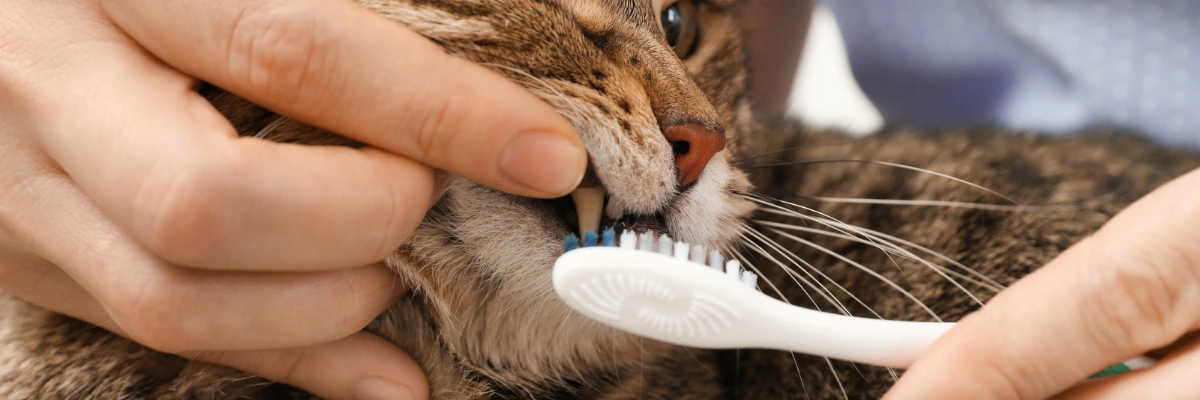
Tooth brushing. Daily brushing is the best way to prevent plaque building up. Introduce it gradually, with plenty of praise and rewards:
- Let your pet lick a little pet toothpaste from your finger (never human toothpaste).
- Once they’re comfortable, gently touch their teeth and gums.
- Move on to a finger brush or soft pet toothbrush, starting with the outer surfaces and the gumline.
Ultrasonic cleaning with our nurses. Our nurses also offer ultrasonic teeth cleaning using the Emmi-pet, a quiet, gentle way to help keep plaque under control while your pet stays awake. It’s a good option for keeping healthy teeth healthy, but it isn’t a substitute for a dental under anaesthetic if your pet already has dental disease. If our nurse spots anything that needs a vet’s attention, they’ll tell you and talk through the next steps. Ask our team for details, or see our dental care page.
What to avoid. Very hard objects can break teeth, including real bones (raw ones too), antlers, hooves, very hard nylon or rubber chews and stones. A good rule: if a chew is so hard you wouldn’t want it hitting your kneecap, it’s probably too hard for your dog’s teeth. Choose chews with a bit of flexibility that suit your pet’s size and chewing style.
How Often Should My Pet Have a Dental Check?
We recommend a mouth check at least once a year as part of your pet’s routine health check. Some pets need to be seen more often, including those with:
- Previous gum disease or dental extractions
- Crowded or misaligned teeth
- Known tooth resorption
- Persistent bad breath or gingivitis
For pets with established dental disease, we may suggest checks every three to six months.
Which Breeds Are More Prone to Dental Problems?
Any dog or cat can develop dental disease, but some are more at risk. Small breeds such as Yorkshire Terriers, Chihuahuas, Dachshunds and Cavalier King Charles Spaniels often have large teeth crowded into small jaws. Flat-faced breeds, including French Bulldogs, Pugs and English Bulldogs, can also have crowded or oddly positioned teeth. In cats, Persians and other flat-faced breeds can have misaligned teeth, and some studies have found tooth resorption more often in Siamese and Abyssinians. Whatever the breed, regular checks matter.
Dental Care and the Healthy Hive Club
Healthy Hive Club members get unlimited consultations, so you can have your pet’s teeth checked as often as you like at no extra charge. Members also save on dental treatment: 20% with Healthy Hive Club and 10% with Healthy Hive Essentials.
If you’d like to find out more, visit our Healthy Hive Club page or ask our reception team.
Frequently Asked Questions
My pet is still eating normally. Can they really have dental disease?
Yes. Many dogs and cats keep eating despite significant dental pain, so eating normally doesn’t rule out gum disease, broken teeth or tooth resorption. That’s why routine dental checks matter.
My cat won’t let me brush their teeth. What else can I do?
You’re not alone. Some cats accept brushing with gradual training, but many never will. Dental diets, suitable oral hygiene products and regular check-ups can all help, and our team can suggest an approach that suits your cat.
How much does a dental cost at Beehive Vets?
It depends on the treatment needed. A straightforward scale and polish costs less than a procedure with several extractions. Our current prices start from £375 for cats and £450 for dogs, and you can see them on our price list. After an examination, we can give you an estimate. Sometimes the full extent of the disease only becomes clear once the teeth have been examined and x-rayed under anaesthetic. If extra treatment is needed, we’ll talk it through with you.
How do I know if my pet needs a dental or just a scale and polish?
A scale and polish is a professional dental procedure, carried out under general anaesthetic. For early disease, cleaning and polishing may be enough. If there’s advanced gum disease or broken teeth, extra treatment or extractions may be needed. A thorough examination, with dental x-rays where appropriate, helps us decide.
My dog has really bad breath. Is that normal?
No. Mild changes in breath can happen, but persistent bad breath usually points to plaque, tartar or gum disease. Occasionally it has other causes, so it’s worth having them examined instead of masking the smell with dental treats.
How can I tell if my cat is in dental pain?
It isn’t always easy. Cats with sore mouths may eat more slowly, drop food, drool, groom less or become withdrawn, but some show no signs at all. If your cat has bad breath, visible tartar or any change in how they eat, we’d recommend an examination.
Looking After Your Pet’s Smile at Beehive Vets
Dental disease is common, but it doesn’t have to be an inevitable part of getting older. With regular check-ups, good home care and treatment when it’s needed, we can help prevent unnecessary pain and keep your pet comfortable.
Whether you’ve noticed bad breath, you’re worried about your pet’s teeth or you’d simply like advice, our friendly team is here to help.
Call: 0113 824 2700
Email: hello@beehivevets.co.uk
Pop in at: 103 Commercial Street, Rothwell, Leeds, LS26 0QD
Book a dental check online today.
Call: 0113 824 2700
Email: hello@beehivevets.co.uk
Pop in: 103 Commercial Street, Rothwell, Leeds, LS26 0QD
Book an appointment online today.
We’re an independent practice in Rothwell and we’re always happy to support local media with honest, practical pet health advice. If you’re working on a story and need a vet’s perspective, drop us a line at hello@beehivevets.co.uk