It’s easy to let your cat’s annual vaccination slip down the to-do list. Your cat seems perfectly healthy, life gets busy, and before you know it the reminder has been sitting on the kitchen counter for three months.
But there’s a very good reason to book it, and it’s about much more than keeping the vaccinations up to date. At Beehive Vets in Rothwell, we see a vaccination appointment as one of the most valuable health checks of your cat’s year. Alongside the vaccination, your vet carries out a thorough examination, and it’s often at these routine visits that we spot problems owners haven’t noticed at home.
Why Cat Vaccinations Matter
Vaccinations protect cats against several serious infectious diseases. How likely your cat is to meet them depends on their lifestyle, but vaccination remains an important part of keeping them healthy.
Cat Flu
Cat flu is a group of respiratory infections, mainly caused by feline herpesvirus and feline calicivirus. Affected cats can develop sneezing, a runny nose, sore or runny eyes, mouth ulcers, a fever and a poor appetite. Many cats recover, but it can be severe in kittens, elderly cats and those with other health problems. Some cats become long-term carriers, with symptoms flaring up when they’re stressed.
Vaccination doesn’t guarantee a cat will never get cat flu, but it can significantly reduce how severe it is.
Feline Enteritis (Panleucopenia)
Feline enteritis is a highly contagious viral disease. It causes severe vomiting and diarrhoea, dehydration and a weakened immune system, and it can be fatal, especially in young kittens. The virus survives in the environment for a long time, so a cat doesn’t need to meet an infected animal to catch it. Vaccination gives very effective protection.
Feline Leukaemia Virus (FeLV)
FeLV weakens the immune system and can cause anaemia and some cancers. It spreads mainly through close contact between cats, such as grooming, sharing food bowls and bites. Vaccination matters most for cats who go outdoors or meet cats whose FeLV status isn’t known. For cats who live entirely indoors with no contact with other cats, the risk may be much lower.
We look at each cat’s circumstances and recommend the right vaccinations, rather than assuming every cat needs exactly the same ones.
It’s Not Just a Jab: Here’s What Else We Check
For many cats, the annual booster is the only time in the year a vet gets a proper hands-on look at them. Because cats are so good at hiding illness, that matters.
Weight and Body Condition
We weigh your cat at every visit and compare it with previous appointments. A gradual loss of a few hundred grams is easy to miss at home, especially in a long-haired cat, but obvious when we can compare records. Unexplained weight loss can be linked to conditions such as an overactive thyroid, kidney disease and diabetes. Slow weight gain matters too, as it raises the risk of diabetes and arthritis.
Teeth and Gums
Dental disease is very common in cats and often overlooked, because cats keep eating even when their mouths are sore. We check for tartar, red or inflamed gums, damaged teeth, signs of tooth resorption and anything unusual in the mouth. Sometimes the first sign of painful dental disease is found during a booster. If we’re concerned, we’ll talk you through the next steps. You can also read our guide to pet dental care.
Heart and Lungs
We listen carefully to your cat’s heart and lungs. Sometimes we find a murmur or an unusual rhythm in a cat whose owner has noticed nothing. Some cats with heart disease, including a thickening of the heart muscle called hypertrophic cardiomyopathy (HCM), look completely well in the early stages.
Not every murmur means heart disease, and some cats with heart disease have no murmur at all. But finding something gives us the chance to look further, for example with a heart scan. We can do this here at the practice. Find out more about our cardiology services.
Tummy
Your vet will gently feel your cat’s tummy, checking the size, shape and position of the organs and looking for lumps or areas of discomfort. Sometimes a change in kidney size or shape shows up this way. Many cats with early kidney disease feel normal, though, so blood and urine tests may still be needed.
Eyes, Ears, Skin and Coat
We check for eye discharge or cloudiness, ear infections or mites, fleas, hair loss, sore skin and over-grooming. Small changes can be early clues. An older cat who has stopped grooming their back, for example, may have arthritis rather than lost interest.
Thyroid
An overactive thyroid is one of the most common conditions in older cats, especially over ten. Typical signs are weight loss despite a good appetite, drinking more, restlessness, and sometimes vomiting or diarrhoea. During the examination, your vet may be able to feel an enlarged thyroid in the neck. That doesn’t confirm the condition, but it tells us a blood test is worth doing. Finding it early matters, because untreated it can affect the heart and blood pressure.
A Chat About Life at Home
Some of the most useful clues come from you. We’ll ask about appetite, drinking, litter tray habits, vomiting or diarrhoea, jumping, grooming and behaviour. An owner might mention in passing that their cat has started drinking more, avoids jumping on the sofa or has become noisy at night. Small things like these can point to something important.
Do Indoor Cats Still Need Vaccinating?
It’s a sensible question. If your cat never goes outside, surely they won’t meet infectious diseases?
Indoor cats do have a lower risk of some infections, especially FeLV, but it isn’t zero. Some germs can be carried in on shoes and clothing, and feline enteritis in particular can survive in the environment for a long time. Indoor cats can also meet other cats if they stay in a cattery, if a new cat joins the household or if they get out unexpectedly.
For those reasons, the main vaccinations (cat flu and enteritis) are generally recommended for all cats. Which vaccines your cat needs, and how often, depends on their lifestyle, so we’ll agree a plan with you. And even in a year when no vaccine is due, the annual health check is still worth having.
How Often Should My Cat Be Vaccinated?
Not every part of the vaccine needs boosting every year. Some can be given every three years, while others, such as cat flu, are often given annually. FeLV depends on the vaccine, your cat’s age and how likely they are to be exposed. We’ll look at your cat’s lifestyle, age, health and vaccination history to recommend the right schedule.
If your cat has been vaccinated at another practice, please bring their vaccination record if you can.
What to Expect at a Cat Vaccination Appointment
We know taking a cat to the vet isn’t always easy. Some cats are relaxed, and others are anxious the moment the carrier comes out. We’re a Gold Cat Friendly Clinic, and we’ve set the practice up to keep visits as calm as possible:
- A separate waiting area for cats, away from the dogs
- Feline pheromone products to help create a calm environment
- Gentle, cat-friendly handling
- Wednesdays tend to be quieter, so ask for one if your cat is nervous
Find out more about our cat friendly clinic.
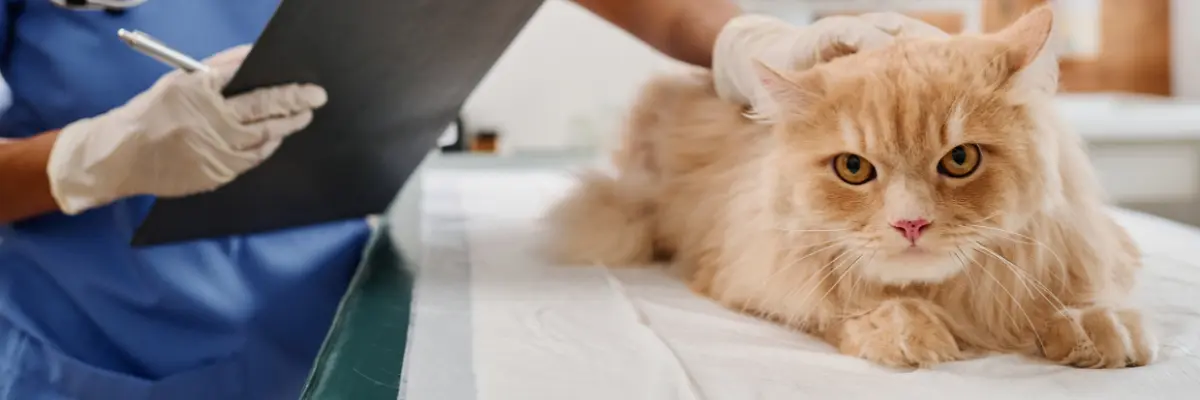
During the appointment, your vet will ask how your cat has been, then examine them. If vaccination is appropriate, they’ll give it. We’ll then talk through anything we’ve found, and whether any tests, treatment or follow-up would help. If there’s something you’ve been meaning to ask about, such as weight, behaviour or teeth, this is a good time.
Kittens and Their First Vaccinations
If you’ve just welcomed a kitten, congratulations! Their first vaccinations are one of the first things to arrange. Kittens can usually start from around eight to nine weeks old. The first course is normally two injections a few weeks apart, though some kittens need an extra one. We recommend booking soon after you bring your kitten home.
It’s also a good time to talk about feeding, flea and worm prevention, neutering, behaviour, insurance and when your kitten can safely go outside. You’ll also need to have them microchipped, which is a legal requirement for cats in England by 20 weeks. Find out about microchipping.
Our puppy and kitten packages bundle the first vaccinations, flea and worming treatment and a health check into one plan, to give your new arrival the best start.
Cat Vaccinations and the Healthy Hive Club
Keeping preventative care up to date is easier when it’s part of a plan. Annual vaccinations are included in Healthy Hive Club membership, so there’s no separate charge, and your cat gets the full health check that comes with each one. It’s a simple way to spread the cost. Find out more about the Healthy Hive Club.
Frequently Asked Questions
How do I know when my cat’s vaccinations are due?
Your cat’s vaccination record shows when their next booster is due. If you’re not sure, call our reception team and we’ll check your cat’s records for you.
My cat has missed a year. Do they need to start again?
Not necessarily. It depends on which vaccines they’ve had, how long they’ve been overdue and the manufacturer’s guidance. Some cats need an extra vaccination, and others don’t need to restart. We’ll look at their history and advise. The important thing is not to put off booking because they’re overdue.
My cat hates the vet. What can you do to help?
You’re not alone, and we can help. We use cat-friendly handling, a separate waiting area and pheromone products. For particularly anxious cats, we can talk about extra steps, such as carrier training or medication before the visit. Please tell us when you book if your cat finds appointments difficult.
Are there any side effects after vaccination?
Most cats are fine. Some are a bit quieter, have a mildly sore spot where the injection went in, eat a little less or run a slight temperature. This usually passes within a day or two.
More serious reactions are uncommon, but if your cat has a swollen face, difficulty breathing, collapses or is repeatedly sick soon after vaccination, contact us or an emergency vet straight away. Very rarely, a lump develops where the injection was given. If it’s still there three months later, is bigger than 2cm or is still growing a month after the injection, please have it checked.
Can my cat go outside straight after their vaccination?
For an adult cat having a routine booster, normal activities can usually resume once they’re feeling well. Kittens having their first course need time to build up protection, and we’ll tell you when it’s safe for them to go outside. If your cat seems tired or sore, let them rest.
Looking After Your Cat’s Health at Beehive Vets
It’s easy to think of a vaccination appointment as something you book once a year to keep the injections up to date. But the real value goes further. It’s a chance to monitor weight, check teeth, listen to the heart, feel the tummy and talk about the small changes that can be early signs of a problem.
For cats, who are so good at hiding illness, regular check-ups can make a real difference. Whether your cat is due a booster, has missed one or simply hasn’t been checked for a while, our friendly team is here to help.
Call: 0113 824 2700
Email: hello@beehivevets.co.uk
Pop in at: 103 Commercial Street, Rothwell, Leeds, LS26 0QD
Book your cat’s vaccination online today.
We’re an independent practice in Rothwell and we’re always happy to support local media with honest, practical pet health advice. If you’re working on a story and need a vet’s perspective, drop us a line at hello@beehivevets.co.uk