Every dog owner knows outdoor adventures can come with some unpleasant surprises. Whether it’s scavenging something questionable near the canal, drinking from muddy puddles or rolling in something foul-smelling, our pets have a habit of finding trouble where we least expect it.
But one of the most common warm-weather hazards for dogs is surprisingly small: grass seeds.
During spring and summer, grass seeds become a frequent problem for dogs across Rothwell and the surrounding Leeds areas, and we regularly treat them because they are causing skin or respiratory issues. Whether you’re walking through Springhead Park, Rothwell Country Park or the grassy footpaths around St Aidan’s Nature Reserve, it’s easy to fall foul of these seemingly innocuous little nuisances.
What are grass seeds?
Grass seeds are the sharp seed heads produced by many common grasses during the warmer months. They’re commonly found in long grass, meadows, woodland edges and overgrown footpaths.
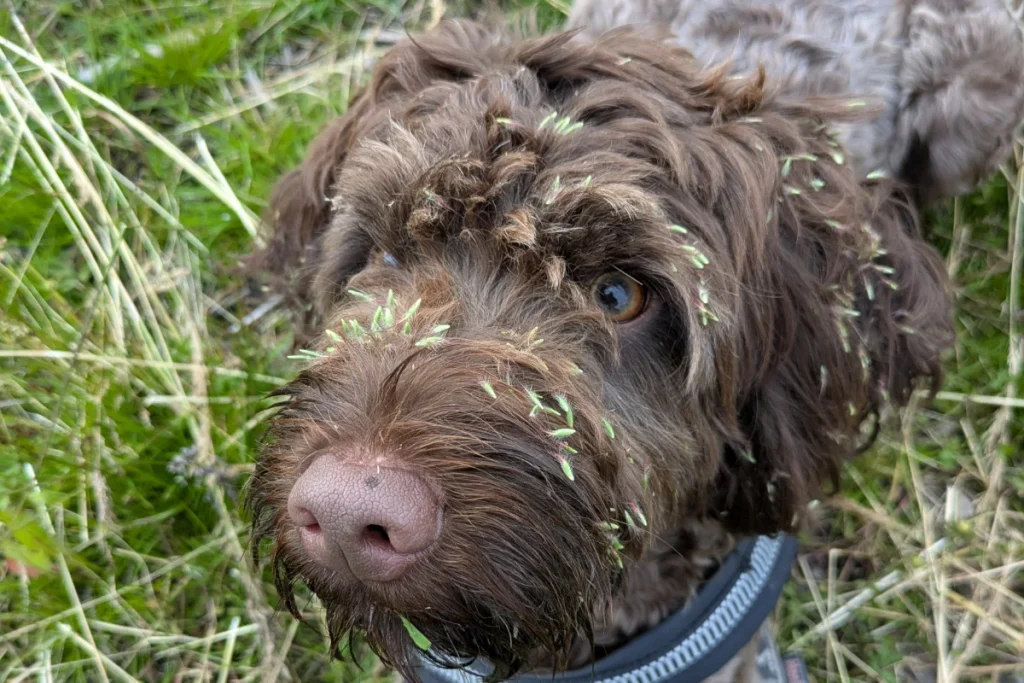
Unlike ordinary seeds, grass seeds are pointed and barbed, which means they can easily cling to your dog’s coat during walks. Once trapped in the fur, they can work their way through the skin or enter sensitive areas such as the ears, eyes, nose and paws.
Even though they’re small, grass seeds can cause significant pain and complications if they aren’t spotted quickly.

Why are grass seeds dangerous for dogs?
Grass seeds are designed by nature to travel. Their arrow-shaped structure allows them to move forwards through fur and tissue but makes it very difficult for them to come back out again.
Once embedded, they can migrate deeper into the body and cause infections, swelling, abscesses and ongoing discomfort. In more serious cases, untreated grass seeds can lead to damage deeper within the body.
Any dog can be affected but some breeds are more vulnerable than others. Dogs with longer coats or hairy feet, including spaniels, retrievers, terriers and doodle breeds, are particularly prone to picking up grass seeds.
Where can grass seeds get into a dog’s body?
Grass seeds commonly enter through:
- The paws and skin, especially between the toes
- The ears, particularly in dogs with floppy ears
- The nose while sniffing through grass
- The eyes, where they can become trapped under the eyelids
- The mouth or throat after swallowing seeds accidentally
Symptoms of grass seeds in dogs
The signs often depend on where the grass seed has become lodged, whether it’s the skin, ears, eyes or nose. Like many minor maladies in pets, it can take some detective work to figure out what’s wrong. Here are some tips on what to look for.
Grass seed in a dog’s paw or skin
You may notice excessive licking or chewing, limping, swelling or redness, a small wound or discharge, or pain when walking. In some cases, a grass seed abscess can develop, creating a painful lump that doesn’t heal properly.
Grass seed in a dog’s ear
Common symptoms include head shaking, scratching at the ear, sudden sensitivity or pain, or a bad smell or discharge from the ear. Grass seeds in the ear can quickly lead to painful infections if not removed promptly.
Grass seed in a dog’s eye
Watch out for redness, squinting, excessive watering, pawing at the face or visible irritation. Grass seeds can scratch the surface of the eye and may cause lasting damage if treatment is delayed.
Grass seed inhaled through the nose
If your dog has inhaled a grass seed, you might notice repeated sneezing, nosebleeds, nasal discharge, pawing at the nose or difficulty breathing. Persistent sneezing after walks through long grass around areas such as Rothwell Country Park or St Aidan’s should always be taken seriously.

What should I do if I think my dog has a grass seed issue?
If you notice any of the symptoms above, it’s important to arrange a veterinary appointment promptly. Grass seeds rarely work their way out naturally. In most cases, they continue to migrate deeper into the tissue, making treatment more complicated the longer they are left.
Early treatment usually means a quicker recovery and less discomfort for your dog.
Treatment for grass seeds in dogs
Treatment depends on where the grass seed is located and how deeply it has travelled. In straightforward cases, we may be able to remove the grass seed during an examination and prescribe medication to prevent infection.
However, deeper grass seeds can require sedation, imaging, endoscopy or surgery to safely locate and remove them. If a grass seed has travelled into the chest or lungs, more advanced procedures may be needed.
Can I remove a grass seed from my dog at home?
If a grass seed is only caught loosely in the fur, you may be able to gently remove it yourself. However, if the seed has entered the skin, paw, ear, eye or nose, it’s best not to attempt removal at home. Trying to remove it yourself can accidentally push it deeper and make the problem worse.
Can dogs sneeze out grass seeds?
Occasionally, yes… but it’s uncommon.
Most inhaled grass seeds become lodged within the nasal passages and can continue to travel deeper over time. Dogs with grass seeds in the nose often continue sneezing repeatedly and may develop bleeding or discharge from one nostril.
If symptoms continue after a walk, your dog should be examined by a vet.

How much does grass seed removal cost?
The cost varies depending on where the grass seed is located and whether sedation or surgery is required. Simple removals may be relatively inexpensive, while more complex procedures involving scans, sedation or surgery can cost significantly more.
Spotting the problem early can often reduce both treatment costs and complications.
How to help prevent grass seeds in dogs
You can’t remove the risk completely but there are several ways to reduce the chances of problems during grass seed season.
Keep your dog well groomed
Regular grooming helps reduce the amount of fur where seeds can become trapped. Pay particular attention to hairy paws and ears.
Avoid long grass where possible
During summer, try to keep dogs away from overgrown grassy areas, especially on warm dry days when seeds are more likely to detach.
Check your dog after walks
After walks around places like Springhead Park, Oulton or local countryside trails, always check your dog’s paws, toes, ears, eyes, armpits and groin area, coat and tail. Removing seeds early can prevent them becoming embedded.
Worried your dog has a grass seed?
Grass seeds may be tiny but they can cause serious pain and complications if ignored. If your dog is limping, sneezing excessively, shaking their head or licking at their paws after a walk, it’s always best to get them checked promptly.
If you’re concerned your dog may have picked up a grass seed, contact our team to arrange an appointment:
Call: 0113 824 2700
Email: hello@beehivevets.co.uk
Pop in at: 103 Commercial Street, Rothwell, Leeds, LS26 0QD