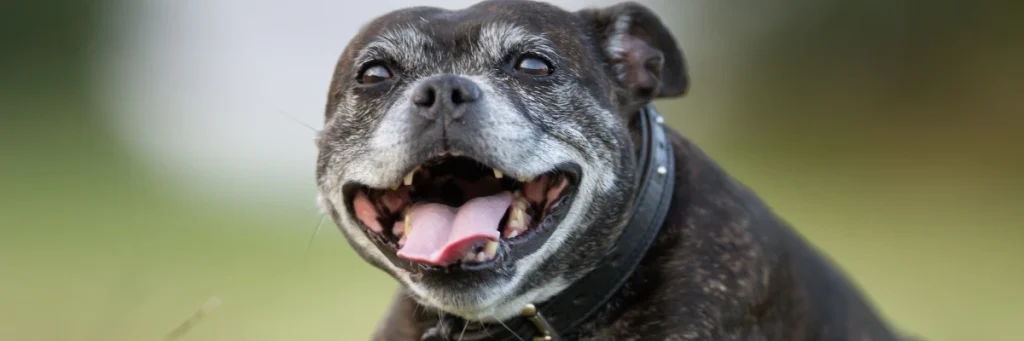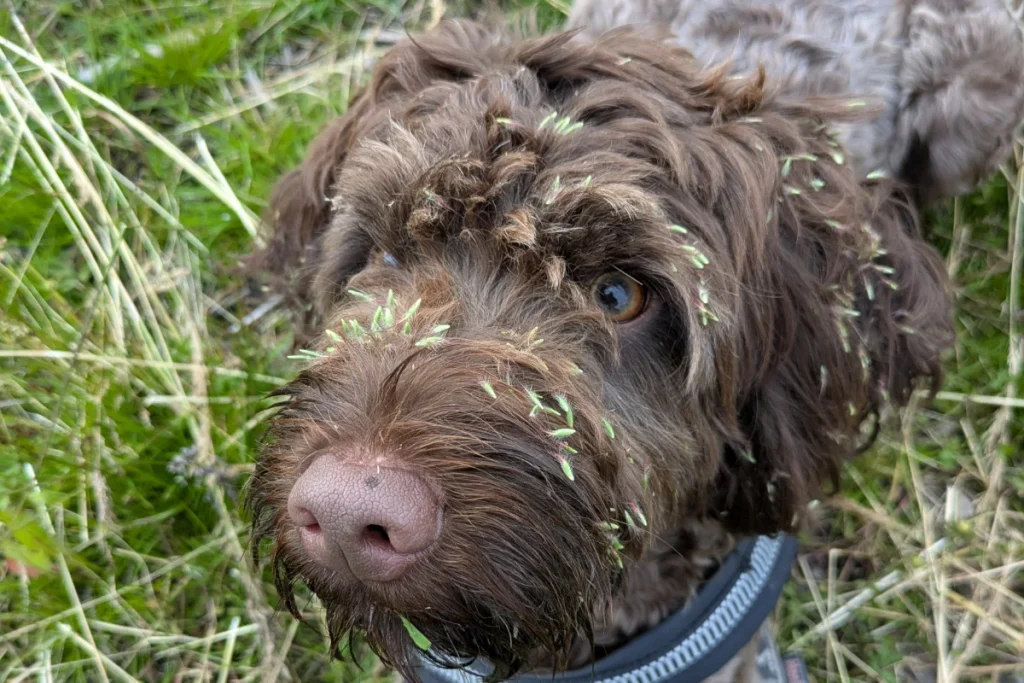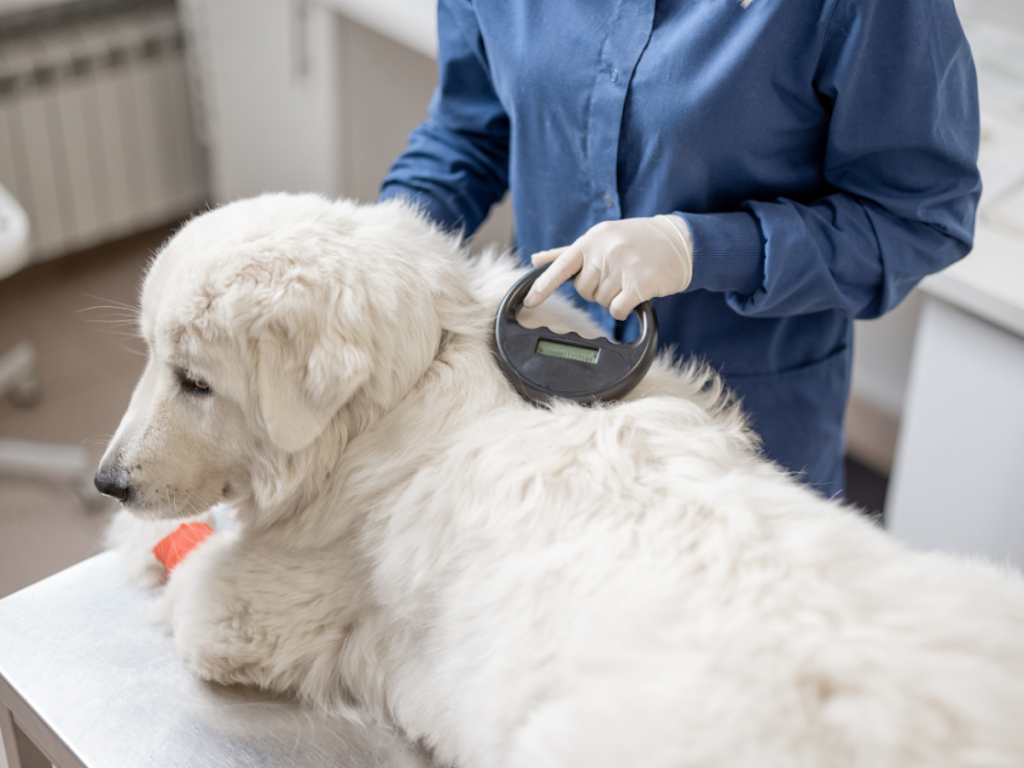
Last year, Rosie was found and brought into Beehive Vets to be scanned for a Microchip.
Whilst the person who found her thought she was likely a stray, everyone was so pleased that when we scanned for a Microchip, we found one.
Rosie had been missing for 3 months!
Her owners had moved house, but Rosie didn’t get the memo. She had walked all the way back to her old neighbourhood and wasn’t able to find her way back to their new home.
Because Rosie was microchipped and her details were up to date, we were able to reunite Rosie with her owners. After 3 months, her owners had lost hope of finding Rosie again and were worried the worst had happened. It was amazing to give them the news that Rosie had been found, and they were very excited to see her safe and well.
We are so pleased we were able to reunite Rosie with her owners, something that was only possible because she had an accurate, up-to-date microchip.
But Rosie isn’t the only pet we have reunited with their family. Just last week, Mylo was found wandering the streets. We scanned his chip and were able to immediately contact his owners and get him back to them.
Is Microchipping a Legal Requirement?
It has been a legal requirement for pets to be microchipped in the UK since 2016 for dogs and 2024 for cats.
The age at which this must be done differs. Puppies need to be microchipped by 8 weeks, and kittens before they are 20 weeks old. This means that in most cases, your pet should have already been chipped when you collect them.
Owners of pets who aren’t chipped can face fines of up to £500.
If my pet is a ‘house cat’, do I still need to get them microchipped?
The short answer is yes, regardless of the law, we advise all pets should be chipped, regardless of how much or how often you plan for them to go outside.
Approximately 22% of Cats are un-chipped, that’s around 2 million pets that could bolt at signs of danger, get confused during a house move, or venture out of a window left open.
When should I check if my pet is microchipped?
If you adopt your pet from abroad, or even if you use reputable UK breeders or shops, it is always worth checking your chip when you first bring them home.
This minimises the time in which they might have out-of-date information, and the risk of you being fined.
It’s also a good idea to check regularly, and if you have regular check-ups with the Vet Nurses here at Beehive, it’s something we can quickly and easily do.
If you move house or there are any changes to your contact details, and you’re not sure if you updated the chip record, it is also worth checking. This means that if, just like Rosie, your pet tries to make their way back to their old home, we will be able to reunite you.
How do I check if my pet is microchipped?
If you have recently brought home a new pet, or re-homed one, you might want to check that they have been implanted with a chip just in case.
It is really quick and easy for a vet to scan your pet for a chip.
Using a small scanner, we can run it over your pet, and it will let us know if it finds a chip and the contact information the chip holds.
Throughout June, as part of Microchipping Month, we are running drop-in ‘Chip Checks’.
During our opening hours, just come into reception with your dog, and we will run a quick scan for you, giving you peace of mind.
With cats, give us a quick call to check before you come in, so we can make sure we have a quiet space available for us to get them out of their carrier.
Why it’s important to check the chip
Don’t assume your pet has been chipped or that the collar tags they wear are enough.
There are an estimated 1.3 million dogs and 2 million cats in England that are not microchipped.
In 2023, Battersea found that only 19% of the stray dogs that had microchips had ones with accurate and up-to-date records.
That means there are literally millions of pets that we would not be able to reunite with their owners should they run away or get lost.
Updating your pet’s chip if you move house, and checking that the information on the chip is accurate, is really important.
Microchipping is also one of the best tools we have in making pet theft less viable. Worryingly, pet theft has seen a rise in recent years, with Direct Line estimating that 6 dogs a day were stolen in 2023.
Ensuring that your pet is chipped can help the police, other vets, or new owners reunite you both and track down the thieves.
Microchipping Month
June is Microchipping Month, so it’s a great time to check that your pet has a chip, that it’s working, and that your details are up to date.
If you know your pet’s chip provider and number, you can update their details online, but whilst chips rarely malfunction or break, this might not give you the peace of mind that everything is working as it should.
If you are worried that your pet might not have been chipped by a previous owner or the rescue, we urge you to come in and check with us.
It would be heartbreaking to not be able to reunite with your pet, especially when chipping is an effective and low-cost way to ensure we can contact you.
If you have any questions on microchipping please get in touch with the team:
Call: 0113 824 2700
Email: hello@beehivevets.co.uk
Pop in at: 103 Commercial Street, Rothwell, Leeds, LS26 0QD